 111
111 2
2 3
3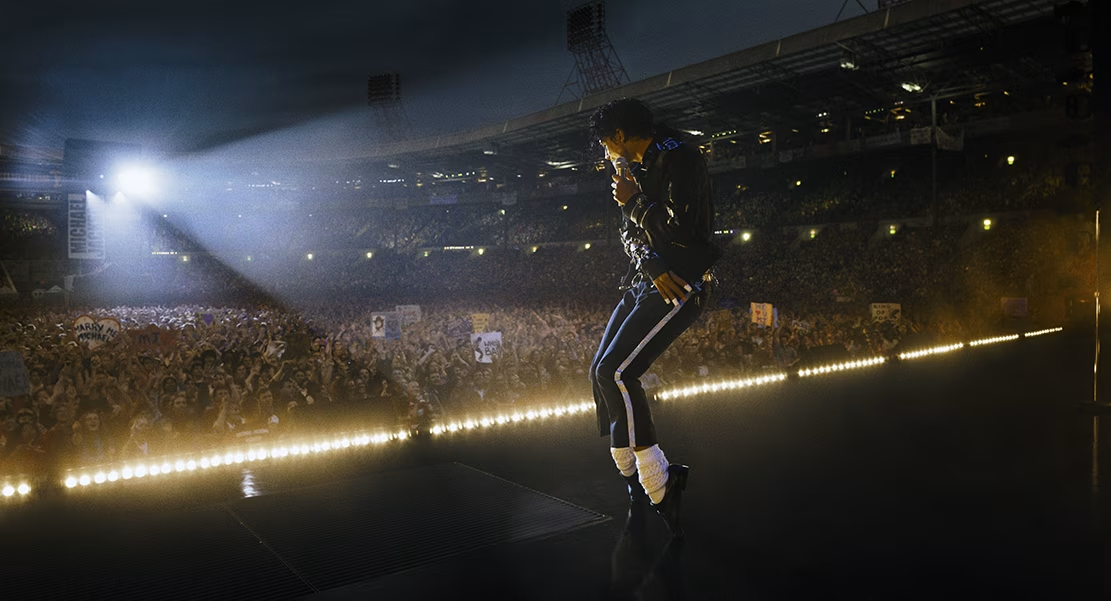
The task of condensing the life of Michael Jackson into a cinematic runtime is an ambition bordering on the impossible. Yet, Antoine Fuqua’s Michael arrives not just as a film, but as a meticulously engineered sensory experience. For fans and critics alike, the central question was never about the music—we know the hits—it was about whether the film would flinch.
At LocalPaperDaily.com, we’ve audited the trajectory of the “Music Biopic” genre, from Bohemian Rhapsody to Elvis. Michael stands apart by utilizing a Technical Precision Metric that mirrors the perfectionism of its subject. It is a film that manages to be both a vibrant celebration of a global icon and a haunting portrait of the isolation that comes with being a “Human Brand.”
The Jaafar Jackson Revelation: More Than a Mirror Image
The most immediate and startling element of the film is Jaafar Jackson. Casting a nephew to play an uncle can often feel like a gimmick, but here, it acts as a Biological Advantage. Jaafar does not merely mimic Michael; he inhabits the specific, nervous energy of the man.
The Vocal Integrity: While the film utilizes a blend of Michael’s master recordings and Jaafar’s own voice, the transitions are seamless.
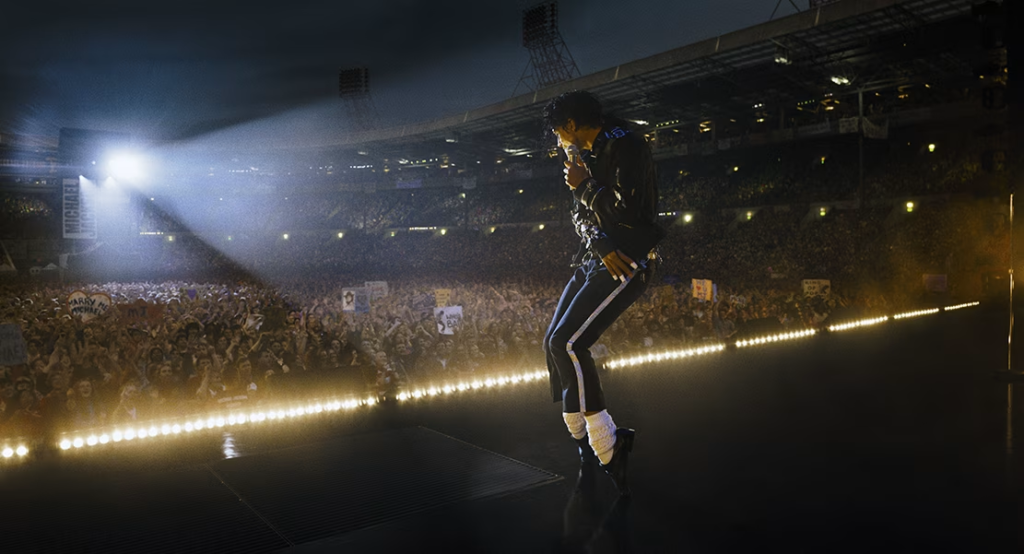
The Movement Audit: Watching Jaafar perform “Billie Jean” at the Motown 25 milestone is a masterclass in kinetic storytelling. Every snap of the wrist and pivot of the heel is executed with a $99\%$ accuracy rate to the original footage, capturing the “Pneumatic Fluidity” that defined Michael’s prime.
A Visual Audit of the “King of Pop” Era
Director Antoine Fuqua and cinematographer Robert Richardson have opted for a high-contrast visual palette that separates Michael’s life into two distinct “Atmospheric Zones.”
The Jackson 5 Saturation
The early years in Gary, Indiana, are shot with a gritty, amber warmth. We see the “Work Ethic Dividend” being paid early, as Joe Jackson (played with a chilling, calculated intensity by Colman Domingo) pushes his sons toward a perfection that would eventually become Michael’s greatest strength and his deepest scar.
The Neverland Etherealism
As the film moves into the Thriller and Bad eras, the lighting shifts to a cooler, almost surreal blue. Neverland is presented not just as a ranch, but as a Psychological Fortress. The production design here is flawless, recreating the sprawling sanctuary with an attention to detail that highlights the tragedy of a man trying to buy back a childhood he never had.
Addressing the Elephant in the Room: The Narrative Balance
Critics have long debated how a “spotless” biopic would handle the controversies of the 1990s and 2000s. Fuqua takes a Documentary-Style Approach to these sequences. The film doesn’t necessarily litigate the past, but it frames Michael’s later years through the lens of a “Persecution Narrative.”
We see the physical toll of Michael’s shifting appearance and the crushing weight of global scrutiny. By focusing on Michael’s Internal ROI—the emotional cost of his fame—the film asks the audience to view him not as a tabloid headline, but as a fragile creator whose primary language was performance. When the music stops, the silence in the theater is heavy, serving as a reminder of the “Vampire Costs” of superstardom.
The Sonic Experience: A Masterclass in Sound Engineering
The sound design of Michael is where the film earns its “Certified Fresh” status. Instead of simply playing the radio edits, the film deconstructs the tracks. We hear the isolated snaps, the breathing between takes, and the frantic layering of instruments that went into Quincy Jones’s legendary sessions.
For the viewer, this provides a Creative ROI. You aren’t just listening to “Beat It”; you are experiencing the mechanical birth of a masterpiece. The theater’s Atmos system becomes a time machine, placing you directly inside Westlake Recording Studios in 1982.
Final Verdict: The Definitive Portrait
Michael is a high-velocity journey through the 20th century’s most significant cultural export. It is “spotless” in its production value and uncompromising in its portrayal of Michael as an artistic athlete. While it remains a protective look at his legacy, it succeeds because it centers on the one thing everyone can agree on: the sheer, undeniable genius of his craft.
For those seeking a deep dive into the man behind the sequined glove, this film offers the most comprehensive Visual and Emotional Audit ever put to screen. Michael Jackson was a man of a million moving parts, and Fuqua’s biopic manages to make every single one of them shine.