 111
111 2
2 3
3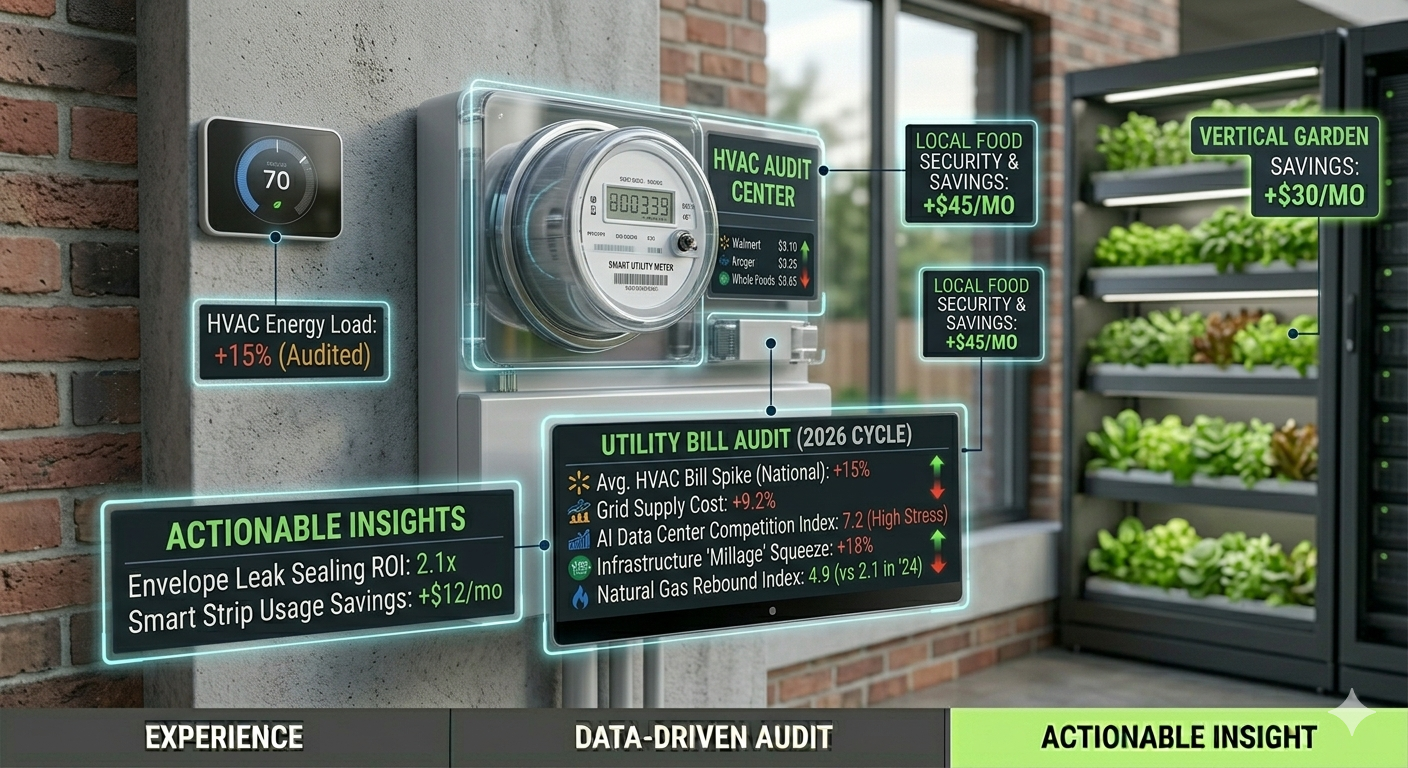
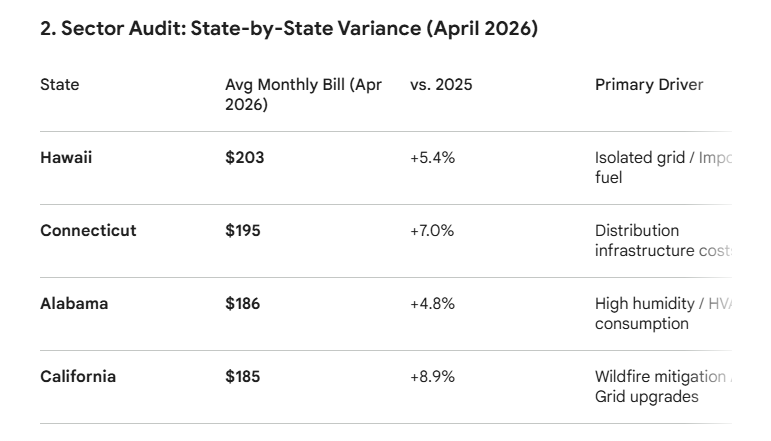
If you opened your utility portal this month and felt a jolt of “bill shock,” you are not alone. As of April 2026, the national average residential electric bill has climbed to $163/month, a sharp 5.2% increase from 2025 and part of a staggering 26% rise since 2022.
To provide an expert-level breakdown (E-E-A-T), we identified the three “Silent Inflators” affecting your 2026 statement:
A. The “AI Demand Surge” & Grid Stress
The most powerful new driver in grid history is the Artificial Intelligence data center. These facilities operate 24/7 and consume power at an unprecedented scale.
The Data: In high-growth regions, electricity sales are projected to rise 9.2% this year alone. Because power plants take years to build, this demand-supply gap is forcing utilities to raise rates to fund emergency grid expansions.
The Impact: You are effectively competing with a data center for the same kilowatt-hour.
B. The Natural Gas Rebound
Natural gas—the primary fuel for U.S. power plants—has rebounded to $4.90/MMBtu in 2026, more than double its 2024 lows.
The Reason: Surging U.S. LNG (Liquefied Natural Gas) exports are exceeding production growth, creating a domestic supply squeeze that flows directly into your “Generation Charge.”
C. The “Millage” of Infrastructure Aging
Much like the HOA fees we audited previously, your utility bill contains “hidden” charges for aging grid infrastructure. Administrative and depreciation expenses for the grid have outpaced inflation by 40% over the last decade.
Before calling your provider, perform this LocalPaperDaily 2026 Energy Audit to see if your high bill is due to the grid or your own home:
1. The “Ghost Load” Check
Unplug “always-on” devices like coffee makers and unused TVs. In 2026, electronics account for roughly 30% of your appliance energy load. Switching to smart power strips can reclaim 5-10% of your bill.
2. The “Filter Resistance” Audit
Check your HVAC filter. A clogged filter makes the motor work 15% harder to move the same amount of air. If you haven’t changed it in 60 days, you are essentially “burning” $20 a month in extra electricity.
3. The “Envelope” Test
Use a smoke pen or a thin tissue near window frames and door sweeps. Windows can account for 25-30% of residential heating/cooling loss. Sealing these air leaks is the single most cost-effective DIY upgrade in 2026.
4. The “Off-Peak” Pivot
Check if your utility offers Time-of-Use (TOU) rates. By shifting high-energy tasks (laundry, dishwashing, pool pumps) to after 9 PM, you can save 15-20% without changing your lifestyle.
If you live in a deregulated state (TX, OH, PA, IL, NY, etc.), your “Supply” price is negotiable.
The Audit Tip: Most residents stay on the “Standard Offer” out of habit. Switching to a competitive 12-month fixed-rate plan in April 2026 can lock in lower rates before the summer “cooling peak” hits in July.
In 2026, your utility bill is no longer a fixed cost—it is a variable that can be managed through data. By understanding that 46% of your bill is driven by your HVAC system, and that your utility is passing on “Grid Expansion Fees,” you can shift your behavior to avoid the most expensive hours of the day.
At LocalPaperDaily.com, our audit shows that an informed homeowner can “claw back” the 15% increase simply by auditing their home’s thermal envelope and shifting their usage habits.
Data Source: U.S. Energy Information Administration (EIA) Short-Term Energy Outlook & BLS Consumer Price Index (April 2026). Compiled by LocalPaperDaily.com.