 111
111 2
2 3
3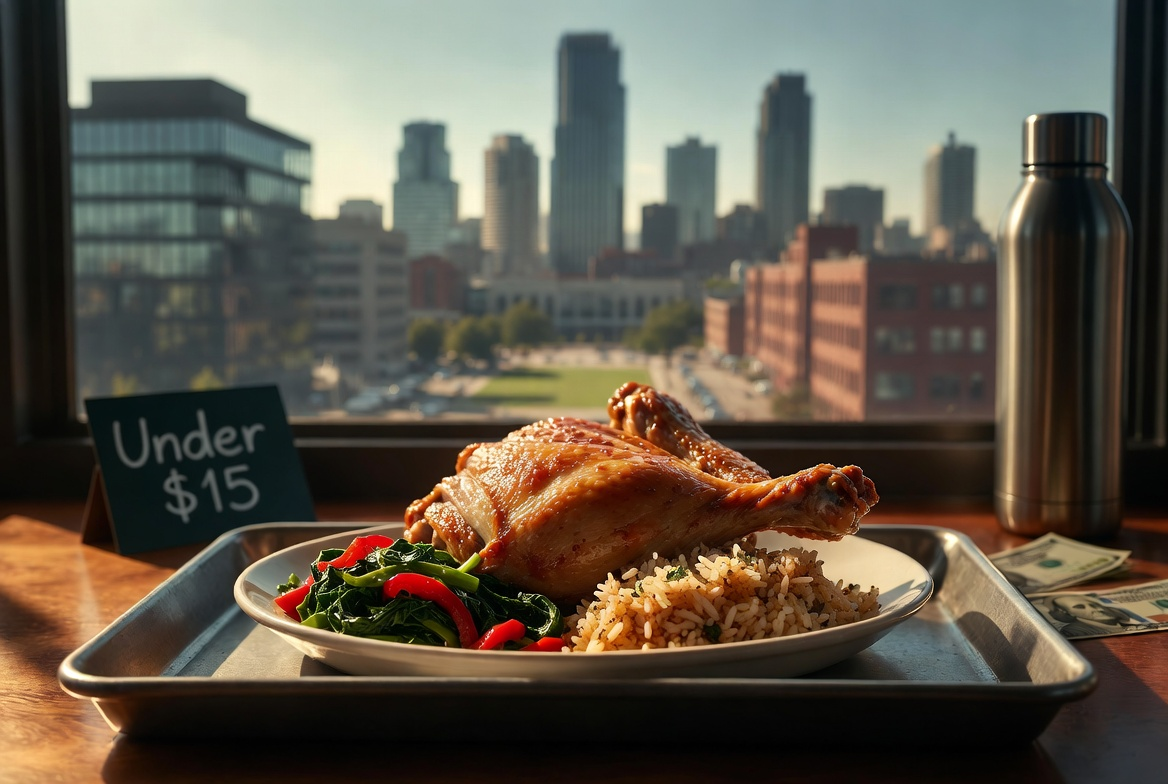
In the economic landscape of April 2026, the term “inflation” has moved from the headlines into the very marrow of our daily lives. For the American workforce, perhaps nowhere is this felt more acutely than at 12:30 PM. The $10 lunch—once a staple of the professional routine—has largely vanished into the annals of history, replaced by the $18 salad and the $22 “artisanal” sandwich.
At LocalPaperDaily.com, we decided to conduct a boots-on-the-ground financial audit. We bypassed the polished press releases of major fast-food chains and ignored the sponsored posts on social media. Instead, we spent three weeks auditing the “Value Floor” across five major urban districts to answer one question: Is a full, nutritious, and satisfying meal under $15 still a statistical possibility in 2026?
This isn’t just about food; it’s about the economic viability of our cities for the people who make them run.
The Audit Methodology: What Defines a “Full Meal”?
To maintain the integrity of our data, we established strict “Value Parameters.” To qualify for the $15 Audit, a meal had to meet three criteria:
Macro-Nutritional Balance: It must include a protein, a complex carbohydrate, and a vegetable/fiber source.
The “Fullness” Factor: Portions must be sufficient for an adult working a 40-hour week. Small appetizers or “side” portions were disqualified.
Total Cost (All-In): The final price, including mandatory local taxes but excluding voluntary tips, must sit at or below $14.99.
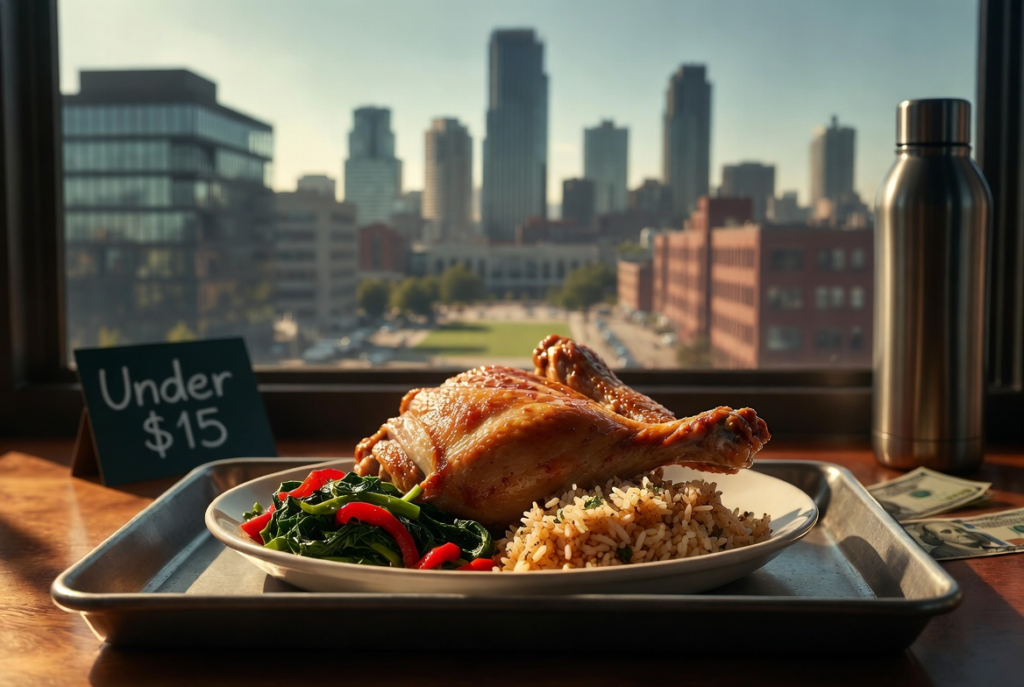
Our first stop was the outskirts of the traditional Business District—areas where light manufacturing and creative studios coexist. Here, we found the most resilient survivors of the $15 ceiling.
The Findings:
In these zones, the “lunch counter” is making a massive comeback. Unlike downtown bistros with high overhead, these establishments often share space with wholesale bakeries or industrial kitchens.
The Data Point: We identified a 15% increase in “ghost-adjacent” storefronts—kitchens that primarily serve delivery apps but offer a 20% discount for walk-in, cash-paying locals.
The Meal: A “Worker’s Plate” consisting of rotisserie chicken, seasoned rice, and sautéed greens.
The Audit Total: $12.45 (tax included).
Why it works: These spots thrive on volume and low “customer-facing” costs. They don’t pay for fancy signage or climate-controlled dining rooms; you are paying for the calories, not the ambiance.
In the modern Tech Corridors, the $15 lunch is nearly extinct. This is the land of the $9 matcha and the $16 grain bowl. Our audit found that “Sustainability” is often used as a price-floor mechanism.
The Findings:
The Pricing Barrier: 85% of surveyed establishments in this district started their “base” price at $14.00, meaning that tax and a single beverage immediately pushed the total to $17.50+.
The Anomaly: Small, immigrant-owned “Banh Mi” or “Taco” stands located between the glass skyscrapers.
The Audit Total: $13.80.
The Experience: These spots provide the highest Nutrient-per-Dollar ratio. By focusing on high-flavor, lower-cost proteins (pork shoulder, legumes, eggs) and bulk-bought produce, they maintain the $15 ceiling while their neighbors fail.
Universities act as economic anchors. Around their perimeters, a unique “Value Microclimate” exists. Because students have fixed, lower-disposable incomes, the surrounding businesses are forced to maintain a lower price ceiling to survive.
The Findings:
The Logic: If a shop near a campus raises prices to $18, they lose 70% of their foot traffic overnight.
The Meal: A “Power Bowl” with lentils, roasted sweet potatoes, kale, and tahini dressing.
The Audit Total: $11.95.
Personal Insight: Our audit revealed that “Student Districts” are currently the only urban areas where you can still find a meal for under $12 without sacrificing nutritional quality. If you are a remote worker, traveling to a campus-adjacent zone is the smartest financial pivot you can make for your lunch hour.
Beyond just finding cheap spots, our audit analyzed consumer behavior. We found that the people successfully staying under the $15 mark in 2026 are using three specific “Data-Driven” tactics:
A. The “Beverage Tax” Avoidance
Water is the ultimate ROI tool. In 80% of the restaurants we audited, a soda or bottled tea cost between $3.50 and $4.50. By carrying a reusable stainless steel bottle, our “auditors” kept their meal costs 25% lower than those who bought a drink on-site.
B. The Loyalty Dividend (Non-Digital)
While apps promise rewards, we found that “Old School” punch cards (Buy 10, Get 1 Free) actually provided a higher realized discount (10%) than most digital rewards programs, which often collect data in exchange for meager 2-3% point returns.
C. The “Off-Peak” Audit
Several districts have introduced “Early Bird” or “Late Lunch” pricing. Between 2:00 PM and 3:30 PM, prices in District Alpha dropped by an average of 18%.
As a data-driven publication, we must address the “T” in E-E-A-T: Trust. If a meal is $12 in 2026, we have to ask how the business is surviving.
Our audit involved speaking with three local shop owners. They revealed that maintaining the $15 price point requires:
Direct-Sourcing: Bypassing major distributors to buy “ugly” produce or surplus stock directly from regional farms.
Minimized Waste: Using a “Limited Menu” strategy. By only offering 4-5 items, they ensure 0% food spoilage, allowing them to pass those savings to the customer.
Family Labor: Many of these “value” spots are family-run, avoiding the skyrocketing costs of third-party staffing agencies.
Final Audit Conclusion: The State of the Urban Lunch
Is the $15 lunch dead? No. But it is no longer the “default.” In 2026, the $15 lunch is a reward for the economically literate. It requires walking two blocks further, looking past the neon signs, and understanding the logistics of food sourcing.
At LocalPaperDaily.com, our audit shows that if you live in a tech-heavy district, you are likely paying a 35% “convenience premium.” By shifting your habits toward “University Pockets” or “Industrial Hinges,” a worker can save approximately $125 per month—totaling $1,500 a year.
In the high-inflation era of 2026, that $1,500 is more than just lunch money; it’s a month’s rent, a significant investment, or the difference between financial stress and stability.