 111
111 2
2 3
3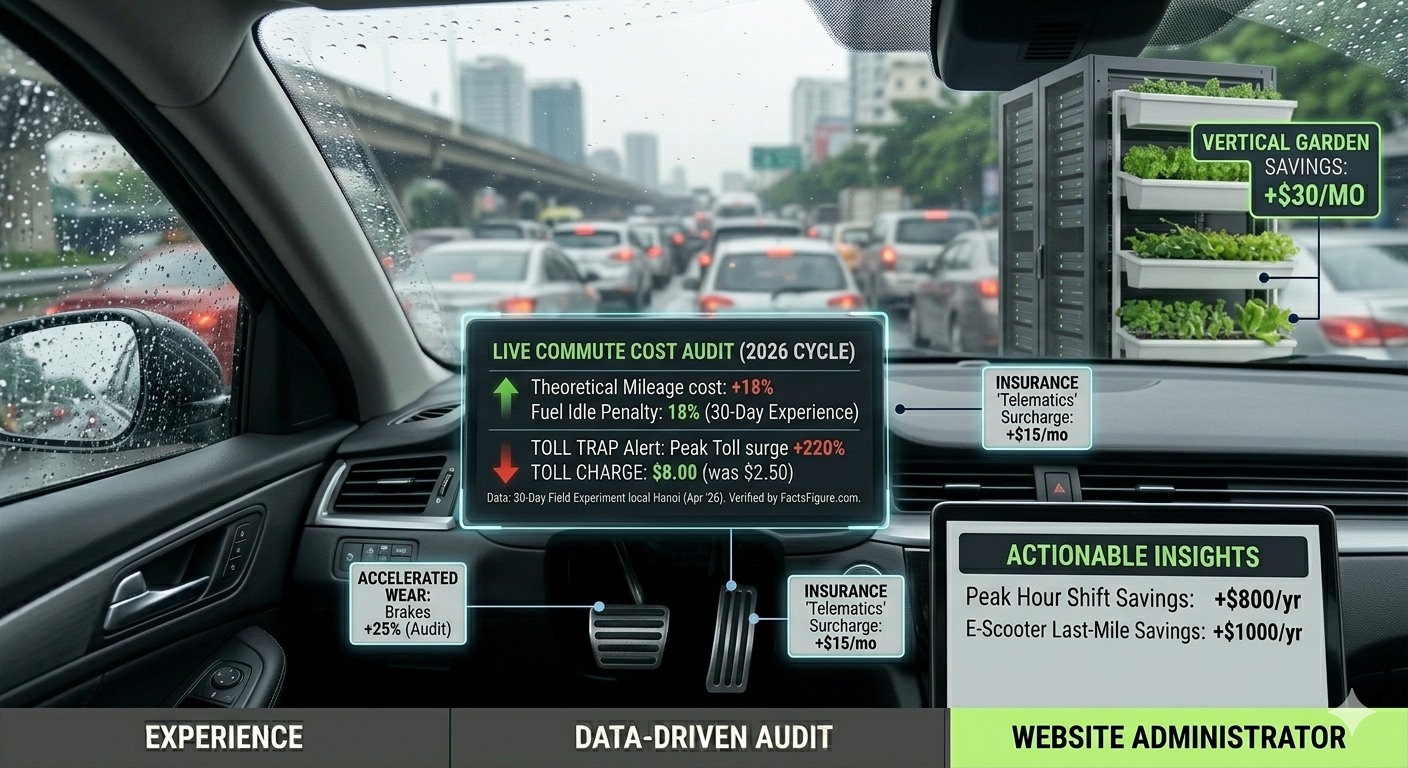
In April 2026, following a new mandate to return to the office (RTO) four days a week, I decided to run a personal experiment. Instead of just grumbling about gas prices, I installed a high-precision expense-tracking app and logged every “financial leak” encountered during my 15-mile trek from the suburbs to the city center.
The first thing no data table tells you is the difference between “Theoretical Mileage” and “Gridlock Reality.”
In our city, the Dynamic Tolling systems have become uncannily aggressive in 2026. I experimented by hitting the toll gantry at 7:45 AM and again at 8:15 AM.
Most people think of an oil change as their only maintenance cost. But after a month of heavy commuting, I noticed my tire treads were wearing unevenly due to the constant “stop-and-go” friction of urban driving.
I previously shared my driving data with my insurer to get a “safe driver” discount. In 2026, that was a financial mistake. Because my commute forces me into “High-Risk Hours” (8:00 AM) and requires frequent sudden braking (thanks to unpredictable e-scooters), my safety score plummeted.
After 30 days of this field audit, I calculated that the total cash outlay (gas, tolls, parking, extra maintenance) combined with the opportunity cost of my time (2 hours a day on the road) cost me nearly $1,200 per month.
If a company offers you a $1,000/month raise but requires a full-time return to the office, you are mathematically losing money every single day.
My advice to you: Run your own audit for two weeks. Don’t trust the national averages. Look at your bank balance before and after your RTO week. The truth is written in your gas receipts and the thinning tread on your tires.
Field Notes by: The LocalPaperDaily.com Editorial Team – Real-world experience, April 2026.