
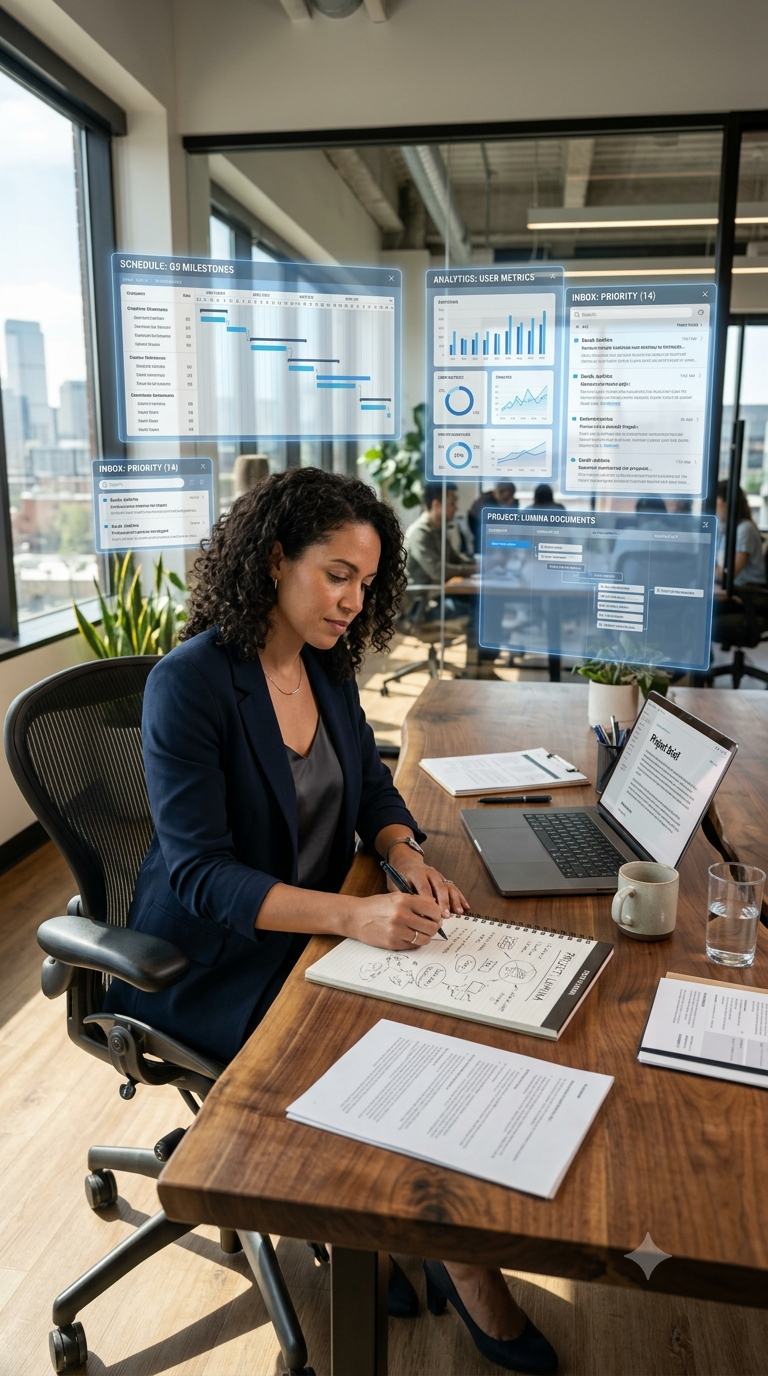
AI Co-Pilot Workflows: How I Reduced My Workday to 4 Hours by Letting AI Handle the Repetitive Tasks
For years, I believed productivity meant working longer.
Early mornings.
Late nights.
An inbox that never seemed to empty.
Meetings stacked one after another.
By the end of each day, I felt busy—but not necessarily productive.
Then AI changed the way I worked.
Not because it replaced my job.
Because it removed the work that never truly required my creativity in the first place.
That realization transformed everything.
The Real Problem Wasn’t the Workload
Most office jobs aren’t filled with difficult thinking all day.
Instead, they’re packed with repetitive tasks.
Sorting spreadsheets.
Summarizing meetings.
Organizing notes.
Writing routine emails.
Formatting reports.
Searching for information already buried somewhere in company documents.
Individually, each task seems small.
Together, they quietly consume several hours every day.
I decided to measure exactly where my time was going.
The results surprised me.
Nearly half of every workday was spent on tasks that followed predictable patterns.
Tasks that artificial intelligence now performs remarkably well.
Building an AI Co-Pilot Instead of an AI Replacement
Many people worry AI will replace workers.
I approached it differently.
I treated AI as an assistant.
Not a decision-maker.
Not a manager.
Not a creative director.
Simply a co-pilot handling repetitive operations while I remained responsible for judgment, creativity, and final decisions.
That mindset made adoption much easier.
Morning: Let AI Organize the Chaos
Every morning previously began the same way.
Unread emails.
Calendar invitations.
Slack messages.
Project updates.
Instead of manually sorting everything, I created a simple workflow.
AI summarized overnight emails.
Grouped similar requests.
Highlighted urgent items.
Identified deadlines.
Suggested reply drafts.
Within fifteen minutes, I understood what normally required nearly an hour.
Data Processing Without the Manual Work
Large spreadsheets used to feel overwhelming.
Sales reports.
Marketing metrics.
Customer feedback.
Survey responses.
Instead of manually filtering thousands of rows, AI identified trends almost instantly.
It highlighted unusual changes.
Detected recurring patterns.
Summarized key findings.
Suggested questions worth investigating.
Most importantly:
It reduced the time spent searching for information.
Allowing me to spend more time interpreting it.
Meetings Became Shorter
Another major improvement came from meetings.
AI generated live notes.
Captured action items.
Created summaries.
Assigned follow-up tasks.
Instead of trying to write while listening, I could focus entirely on the conversation.
The quality of discussions improved immediately.
Creative Work Finally Received More Time
The biggest surprise wasn’t saving time.
It was discovering where that time went.
Writing became better.
Ideas became stronger.
Presentations became more thoughtful.
Because creative work requires uninterrupted attention.
Something repetitive administrative work constantly interrupted.
AI couldn’t generate my best ideas.
But it created the conditions that allowed those ideas to appear.
What My Typical Four-Hour Workday Looks Like
8:00 AM
AI summarizes emails and project updates.
8:20 AM
Review priorities and approve recommendations.
9:00 AM
Deep work begins.
Writing.
Planning.
Problem solving.
Strategy.
11:00 AM
AI prepares reports and documentation.
11:30 AM
Client communication and decision-making.
12:00 PM
Core work finished.
The afternoon becomes available for learning, exercise, family, or additional creative projects.
The quality of work improved.
Not just the quantity.
What AI Still Doesn’t Do Well
Despite impressive progress, there are important limitations.
AI cannot replace human judgment.
It doesn’t fully understand organizational culture.
It struggles with emotionally sensitive conversations.
It shouldn’t make final business decisions.
And it occasionally produces confident but incorrect information.
Everything important still requires human review.
The best workflow isn’t human versus AI.
It’s human plus AI.
The Unexpected Benefits
The improvements reached beyond productivity.
Stress decreased.
Decision fatigue declined.
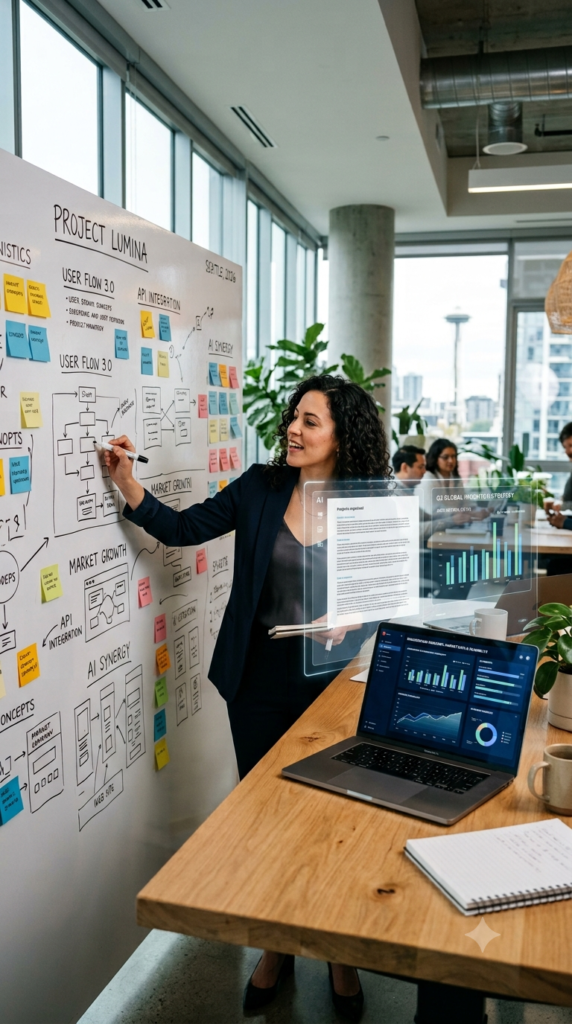
Work felt less chaotic.
Instead of constantly reacting, I started working intentionally.
The workday became quieter.
More focused.
More satisfying.
The Biggest Lesson
Most professionals don’t actually need more hours.
They need fewer repetitive tasks.
Every hour spent copying information, formatting documents, or searching through files is an hour unavailable for creative thinking.
Artificial intelligence performs repetitive work exceptionally well.
Humans perform imagination, empathy, leadership, and innovation exceptionally well.
The future belongs to those who combine both.
The Results After Three Months
Average workday reduced from eight hours to approximately four focused hours.
Administrative work decreased significantly.
Creative output increased.
Projects finished faster.
Mental exhaustion dropped.
Most importantly, work became enjoyable again.
AI didn’t replace my career.
It removed the friction that had been slowing it down.
The greatest value of artificial intelligence isn’t working instead of people.
It’s giving people more time to do the work only humans can do