

With food prices still elevated across the United States in 2026, many families are wondering whether it’s even possible to feed four people on a grocery budget of just $500 per month.
Surprisingly, the answer is yes—but only with careful planning, smart shopping strategies, and a focus on nutritious, budget-friendly foods.
Using current U.S. grocery pricing trends, warehouse club pricing, discount supermarket data, and practical meal planning methods, this guide breaks down exactly how a family of four can stretch $500 into 30 days of breakfasts, lunches, dinners, and snacks without sacrificing nutrition.
The $500 Grocery Challenge: How to Feed a Family of Four for a Month (2026 Edition)

For many American families, grocery shopping feels more expensive than ever.
Prices have stabilized compared to the sharp increases seen earlier in the decade, but food costs remain significantly higher than they were just a few years ago.
As a result, thousands of households are asking a difficult question:
Can a family of four realistically eat for an entire month on just $500?
The answer may surprise you.
While it requires planning and discipline, many budget-conscious families are already doing exactly that.
The key isn’t eating less.
It’s shopping smarter.
Understanding the Math
A $500 monthly grocery budget works out to approximately:
$125 per week
$17 per day
About $4.25 per person daily
At first glance, that sounds impossible.
A single fast-food meal can cost more than that.
But grocery shopping operates differently.
When meals are built around affordable staple foods, costs drop dramatically while nutrition remains strong.
The Biggest Mistake Families Make
Most grocery budgets fail before shoppers even enter the store.
The problem isn’t usually food prices.
It’s impulse purchases.
Pre-packaged snacks.
Convenience meals.

Name-brand products.
Sugary drinks.
Ready-to-eat foods.
These items often consume 30% to 50% of a family’s grocery budget while providing relatively little nutrition.
The $500 challenge focuses on whole ingredients instead.
Building the Budget Foundation
The most successful budget meal plans rely on a small group of affordable staple foods.
Rice.
Pasta.
Oats.
Potatoes.
Beans.
Lentils.
Eggs.
Frozen vegetables.
Chicken.
Ground turkey.
Seasonal fruits.
Peanut butter.
These foods deliver the highest nutritional value per dollar spent.
A Sample Monthly Shopping List
A realistic $500 budget may include:
40 pounds of rice
20 pounds of potatoes
10 pounds of oats
8 dozen eggs
20 pounds of chicken
10 pounds of ground turkey
Large bags of frozen vegetables
Peanut butter
Bread
Pasta
Tomato sauce
Milk
Yogurt
Bananas
Apples
Seasonal produce
Dry beans and lentils
Basic seasonings
Purchased strategically from discount retailers and warehouse stores, these items can provide hundreds of meals.
Breakfast Without Breaking the Budget
Breakfast is often the easiest meal to make affordable.
Oatmeal with bananas.
Eggs and toast.
Peanut butter sandwiches.
Yogurt with fruit.
Homemade breakfast burritos.
Most of these meals cost less than one dollar per serving.
Compared with restaurant breakfasts costing $8 to $15 per person, the savings add up quickly.
Budget-Friendly Lunches
Lunches are another area where families can save significantly.
Leftovers from dinner.
Bean and rice bowls.
Turkey sandwiches.
Homemade soups.
Pasta salads.
Simple wraps.
Packing lunches instead of purchasing them can save hundreds of dollars every month.
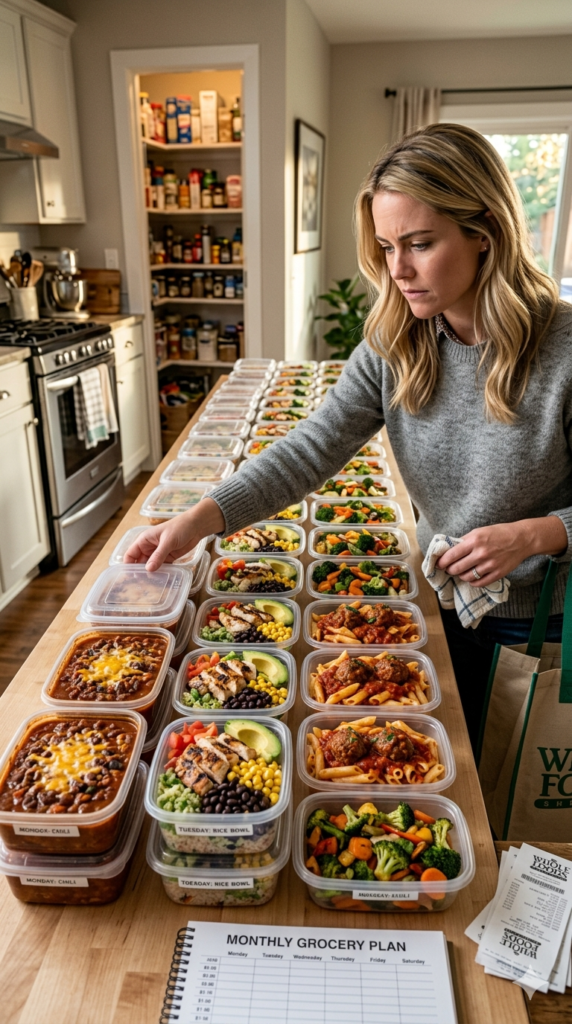
Affordable Dinners That Actually Fill Everyone Up
Dinner often determines whether a grocery budget succeeds or fails.
The most effective strategy is building meals around affordable proteins and filling carbohydrates.
Examples include:
Chicken and rice.
Turkey chili.
Bean soup.
Pasta with meat sauce.
Chicken stir-fry.
Baked potatoes with toppings.
Vegetable fried rice.
Taco bowls.
These meals can feed four people for less than $8 to $12 total.
The Power of Batch Cooking
One secret shared by successful budget shoppers is batch cooking.
Preparing large portions reduces waste and lowers costs.
A single pot of chili can provide:
Dinner on Monday.
Lunches on Tuesday.
Freezer meals later in the month.
This approach minimizes food waste while reducing the temptation to order takeout.
Avoiding the Hidden Budget Killers
Several categories consistently destroy grocery budgets:
Soft drinks.
Energy drinks.
Prepared desserts.
Single-serving snacks.
Convenience foods.
Frequent restaurant meals.
Many families discover that eliminating just a few of these items creates enough savings to stay within budget.
What the Data Shows in 2026
Current grocery pricing suggests that a $500 monthly food budget remains achievable for a family of four in many parts of the United States.
However, success depends heavily on:
Meal planning.
Bulk purchasing.
Cooking at home.
Limiting food waste.
Reducing convenience purchases.
Families that consistently follow these principles often spend hundreds less than households relying heavily on processed foods and takeout.
The Verdict
Feeding a family of four on $500 per month isn’t easy.
But it is possible.
The challenge isn’t finding enough food.
The challenge is resisting expensive habits that quietly drain grocery budgets.
With smart planning, simple meals, and a focus on value rather than convenience, a family can stay nourished, healthy, and financially stable.
In 2026, the families winning the grocery game aren’t necessarily spending more.
They’re spending smarter.