 111
111 2
2 3
3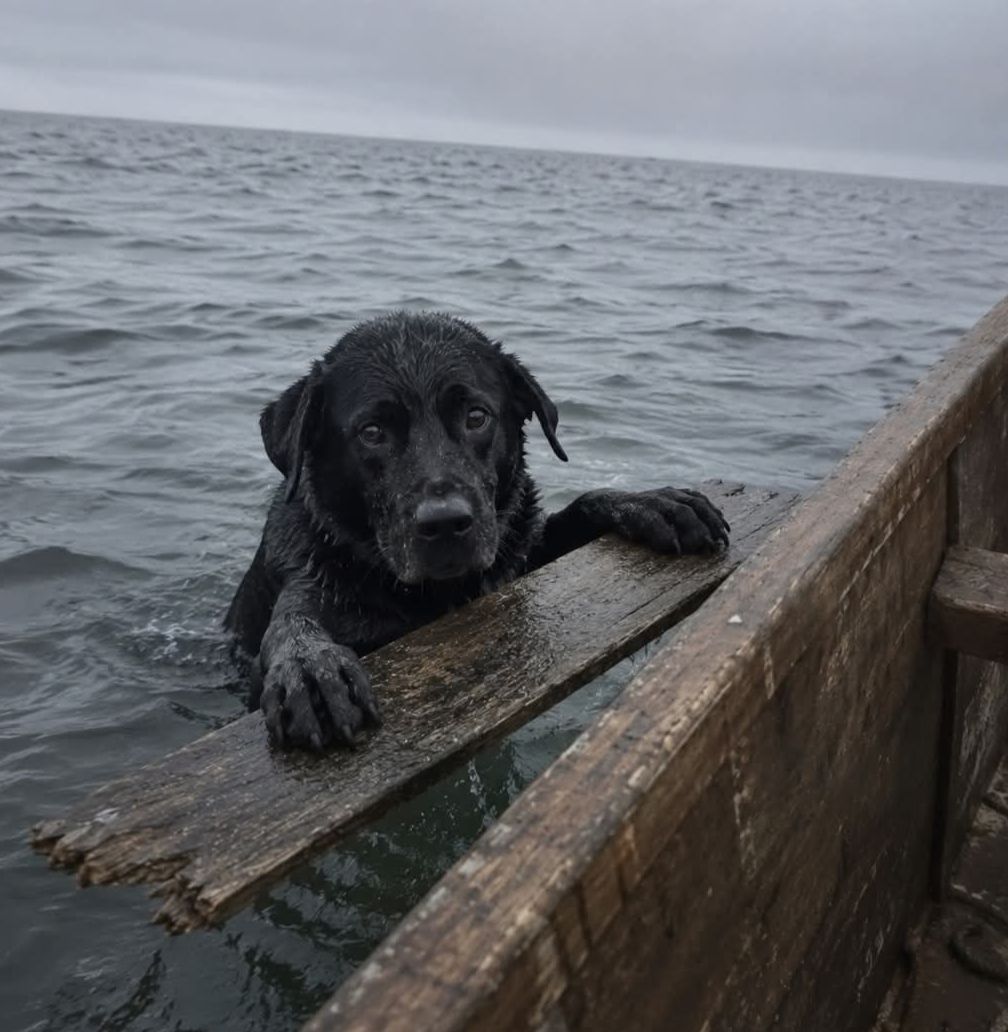
They threw the dog off a boat nearly three miles from shore in the middle of the night.
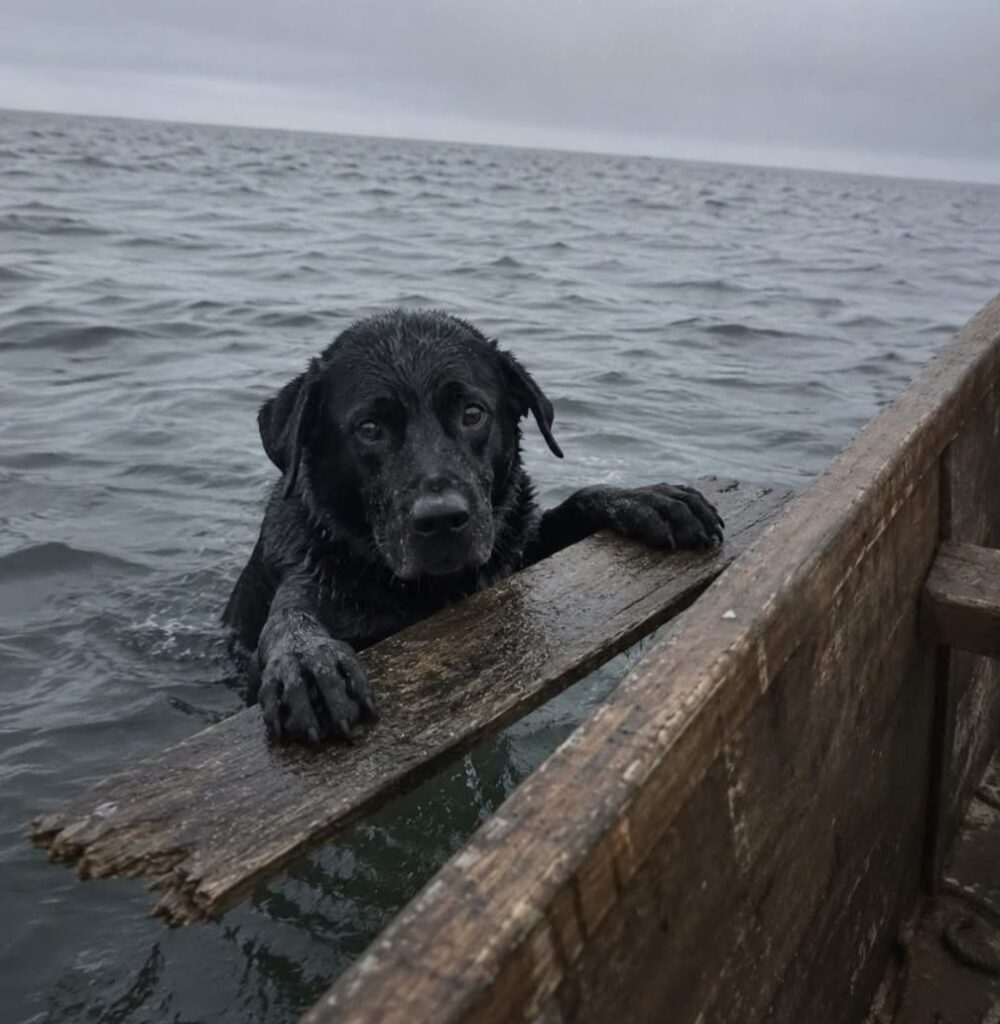
Eleven hours later, a lobster fisherman found her still alive in the freezing Atlantic Ocean, clinging to a broken section of driftwood with such desperate force that rescuers had to cut the wood apart to free her jaws.
Even the veterinarian said he had never seen anything like it.
It happened in late September of 2023 off the rocky coastline near a tiny fishing harbor in northern Maine.
The ocean that morning was steel gray and rough from an overnight storm. Cold wind pushed heavy swells across the water while commercial lobster boats moved slowly between trap lines before sunrise.
One of those boats belonged to a fisherman named Daniel Mercer, a quiet sixty-two-year-old man who had spent more than three decades working those waters.
Around 6:15 a.m., Daniel noticed something strange floating several hundred feet from his starboard side.
At first he thought it was debris from the storm.
Then the shape moved.
His deckhand later said it was the first time he had ever heard Daniel sound genuinely shaken.
Because floating there in open water was a dog.
A black Labrador retriever.
Small for the breed. Maybe fifty pounds at most. Her fur was soaked flat against her body, and she was barely staying above the surface. She wasn’t swimming anymore.
She was holding onto a jagged section of broken dock plank roughly four feet long.
Not resting on it.
Holding it.
Her jaws were locked around the wood so tightly her teeth had sunk deep into the soaked timber. One front paw hooked around the plank while the rest of her body dragged heavily through the freezing water behind it.
The dog’s eyes were open, but distant.
Her entire body shook violently in continuous spasms that went beyond normal shivering. Hypothermia had already begun shutting her systems down one by one.
Daniel maneuvered the boat closer carefully, terrified she would lose her grip and slip under.
When he finally leaned over to lift her, he realized something horrifying.
The dog physically could not let go.
Her jaw muscles had locked so hard around the driftwood that her teeth were embedded into it. Hours of survival panic had caused her entire body to clamp down instinctively.
Daniel later admitted he nearly cried right there on the deck.
Instead of prying her loose and risking breaking her jaw, he used a saw to cut away the section of wood she was attached to and lifted both the dog and the plank together onto the boat.
The Labrador barely reacted.
She simply kept biting the wood.
Daniel wrapped her in his heavy oilskin jacket while his deckhand radioed emergency services back at the harbor.
Later that afternoon, authorities reviewed marina security footage from the previous night.
At 9:41 p.m., cameras captured a small recreational boat stopping several miles offshore. Two people could be seen lifting a struggling dark-colored object over the railing and throwing it into the ocean.
That object was the dog.
The water temperature that night had been fifty-two degrees.
The current alone should have killed her within hours.
A harbor patrol officer later estimated the Labrador drifted nearly six miles overnight before Daniel found her.
Veterinarians immediately began treatment the second she reached shore.
Even sedated, the dog still refused to release the wood from her mouth.
The veterinarian, Dr. Ellen Burke, said the jaw tension was unlike anything she had ever encountered.
“The survival response was completely locked in,” she explained later. “Her body believed letting go meant death.”
It took nearly four full minutes after sedation before the muscles finally relaxed enough to separate her teeth from the plank.
When they examined her mouth, they found several cracked teeth and deep gum lacerations from biting down on waterlogged hardwood for nearly half a day.
But that was only the beginning.
Her core temperature had dropped to dangerously hypothermic levels.
Her heart rate was critically low.
She had swallowed massive amounts of saltwater, severely stressing her kidneys and digestive system. Her lungs showed signs of near-drowning complications. Both rear legs suffered nerve damage from prolonged cold-water exposure.
One rear paw never fully recovered.
Even months later, she would walk with a slight limp and stiffness whenever temperatures dropped.
The pads on her front paws were shredded raw from clawing at splintered wood while waves battered her through the night. Tiny fragments of driftwood had embedded beneath the skin and between her toes.
Dr. Burke removed over twenty splinters during surgery.
But what stunned everyone most was this:
The Labrador should not have survived physically.
After several hours in freezing Atlantic water, exhaustion alone normally forces muscles to release involuntarily. Yet somehow she continued holding onto that drifting plank through pain, hypothermia, cramping, and exhaustion long after her body should have failed.
Dr. Burke later said quietly, “I’ve treated dogs pulled from rivers, lakes, and ice water before. But I’ve never seen an animal override survival fatigue like this. She decided she was not going to die.”
Recovery took nearly two months.
Fluid therapy.
Kidney monitoring.
Physical rehabilitation for the nerve damage.
Wound care for her paws and jaw.
At first, the dog panicked anytime anyone approached with water bowls too quickly. Bathing her was impossible. Even hearing crashing waves from the harbor made her tremble violently.
But Daniel visited every single day.
Every morning before heading out to sea.
Every evening after docking.
He’d sit quietly beside her kennel talking softly while she rested her injured head on his boot.
Daniel had never owned a dog before.
But by the fourth week, everyone at the clinic already knew she belonged to him.
When she was finally healthy enough to leave, Daniel brought her home to his tiny weather-beaten house overlooking the harbor.
And he gave her the strangest name imaginable.
Timber.
His deckhand laughed and asked why he didn’t pick something prettier.
Daniel looked toward the ocean outside the clinic window before answering.
“Because that piece of wood kept her alive,” he said simply. “Everyone else threw her away. But some broken driftwood floating in the dark gave her one chance, and she held onto it.”
So he named her after the thing that saved her.
Today Timber is estimated to be around six years old.
She still carries scars from that night.
Several of her front teeth remain chipped.
Her back leg drags slightly when she gets tired.
And she refuses to go anywhere near open water.
Not once has she stepped willingly onto Daniel’s boat.
Instead, every evening she waits inside the harbor-facing window of his house watching for him to return.
And there’s one thing she still does that Daniel can barely talk about without his voice breaking.
Whenever he comes home smelling like saltwater and diesel fuel, Timber walks straight to him, climbs heavily into his lap, and grabs the sleeve of his old oilskin jacket gently in her mouth.
Not chewing.
Not playing.
Holding on.
The exact same way she held onto that driftwood plank.
Same pressure.
Same desperate grip.
Like some part of her still believes letting go means sinking beneath the waves forever.
Daniel never pulls away.
Sometimes he sits there for nearly an hour with the dog quietly holding onto his sleeve while both of them stare out at the Atlantic through the window.
A fellow fisherman once asked him why he lets her do it every night.
Daniel looked down at the black Labrador sleeping beside his chair and answered softly:
“Some people talk about the will to live like it’s just a saying.”
He paused for a long moment.
“I pulled it out of the ocean with my own hands.”
Then he looked back toward the dark water outside the harbor.
“She held on for eleven hours in freezing waves because she believed if she stopped fighting for even one second, she’d disappear.”
He reached down and scratched gently behind Timber’s ears.
“So if she still needs to hold onto something safe sometimes…”
He smiled quietly.
“She’s earned that right.”