 111
111 2
2 3
3
By LocalPaperDaily.com Staff
Meta Description:
The Philadelphia 76ers and Portland Trail Blazers respond with strong Game 2 performances to even their playoff series 1–1. Full recap, analysis, and what to expect next.
The early stages of any playoff series often reveal more than just the scoreline—they expose weaknesses, test adjustments, and highlight which teams can respond under pressure. After disappointing openings in Game 1, both the Philadelphia 76ers and the Portland Trail Blazers delivered exactly the kind of response expected from serious contenders.
In Game 2, both teams showed resilience, discipline, and tactical growth. Their victories not only evened their respective series at 1–1 but also shifted the momentum heading into the next phase. More importantly, these performances demonstrated a crucial playoff trait: the ability to adapt quickly.
This in-depth recap explores how both teams adjusted, who made the biggest impact, and what these results could mean moving forward.
The Philadelphia 76ers entered Game 2 with a clear focus—tighten their defense and regain control of the game tempo. After allowing too many open opportunities in Game 1, their approach was far more disciplined this time around.
Improved Defensive Structure
One of the most noticeable changes was the team’s defensive coordination. Instead of reacting late, the 76ers anticipated plays more effectively.
Key improvements included:
quicker rotations on perimeter defense
better communication during switches
stronger contesting of shots
These changes disrupted the opponent’s offensive flow and reduced easy scoring chances.
Balanced Offensive Execution
Offensively, the 76ers avoided over-reliance on isolation plays. Instead, they emphasized ball movement and spacing, which led to higher-quality shot opportunities.
This approach resulted in:
more open perimeter shots
better interior scoring chances
fewer forced attempts
By distributing scoring responsibility across multiple players, the team became harder to defend.
Controlling the Game Pace
Another critical factor was tempo control. The 76ers avoided rushing possessions and instead focused on executing plays with patience. This reduced turnovers and allowed them to maintain consistent scoring runs.
Late in the game, their composure stood out. Unlike Game 1, they handled pressure situations calmly and made smart decisions down the stretch.
The Portland Trail Blazers faced a similar challenge after their Game 1 loss. Their Game 2 response was built on speed, confidence, and improved efficiency on both ends of the floor.
Increased Tempo and Transition Play
One of the biggest differences was the pace of play. The Trail Blazers pushed the ball more aggressively, creating fast-break opportunities.
This strategy helped them:
generate easy points
prevent the defense from setting up
maintain offensive rhythm
Transition scoring became a key advantage.
Shooting Accuracy Makes the Difference
Shooting struggles in Game 1 were a major issue, but in Game 2, the team showed significant improvement. Better shot selection led to higher efficiency, especially from long range.
The offense looked more fluid, with players finding space and taking confident shots.
Defensive Intensity and Rebounding
Defense played an equally important role. The Trail Blazers increased their effort in:
closing out on shooters
contesting shots
securing rebounds
By controlling the boards, they limited second-chance points and maintained control throughout the game.
Every playoff game includes turning points that define the outcome. In Game 2, both teams capitalized on critical stretches.
76ers’ Decisive Run
The 76ers created separation during a strong run in the second half. This sequence included:
consecutive defensive stops
efficient offensive execution
disciplined ball movement
This momentum shift proved decisive.
Trail Blazers’ Game-Changing Stretch
For the Trail Blazers, momentum shifted when they forced turnovers and converted them into quick points. This not only increased their lead but also disrupted the opponent’s confidence.
Both teams demonstrated how important in-game adjustments are in playoff basketball.
76ers Adjustments
focused on defensive communication
improved shot selection
reduced turnovers
Trail Blazers Adjustments
increased pace
emphasized transition scoring
improved perimeter defense
These changes highlight the importance of flexibility and coaching decisions.
Avoiding a 0–2 deficit is critical in any playoff matchup. By winning Game 2, both teams regained confidence and removed early pressure.
This shift provides:
mental advantage
renewed belief
strategic flexibility
Momentum is now evenly balanced.
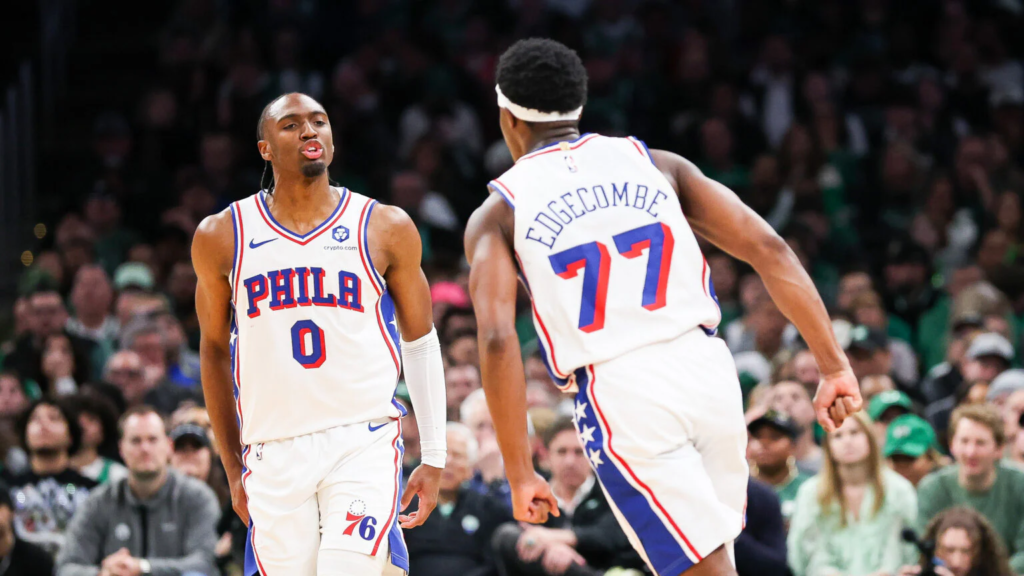
With the series tied at 1–1, the next games become even more important.
Areas to Watch
defensive matchups
bench contributions
three-point shooting consistency
Both teams will continue adjusting, and small details could determine the outcome.
While basketball is a team sport, individual performances often define playoff success.
Key Factors
scoring consistency
leadership in pressure moments
defensive presence
Players who maintain high performance levels will likely influence the direction of the series.
Home court advantage plays a significant role in playoff games. Familiar surroundings and crowd support can boost performance.
By winning Game 2, both teams have:
regained confidence
maintained competitiveness
positioned themselves well for upcoming games
These results reflect a common theme in playoff basketball: adaptability.
Teams that can learn from losses and respond effectively often have deeper playoff runs. The performances by both the 76ers and Trail Blazers show that neither team is willing to fall behind easily.
Game 2 served as a reminder that playoff series are rarely predictable. After early setbacks, both the Philadelphia 76ers and Portland Trail Blazers responded with strong, disciplined performances.
By evening the series at 1–1, they have reset the competition and created a more balanced and exciting matchup moving forward. As adjustments continue and pressure increases, fans can expect even more competitive games ahead.