 111
111 2
2 3
3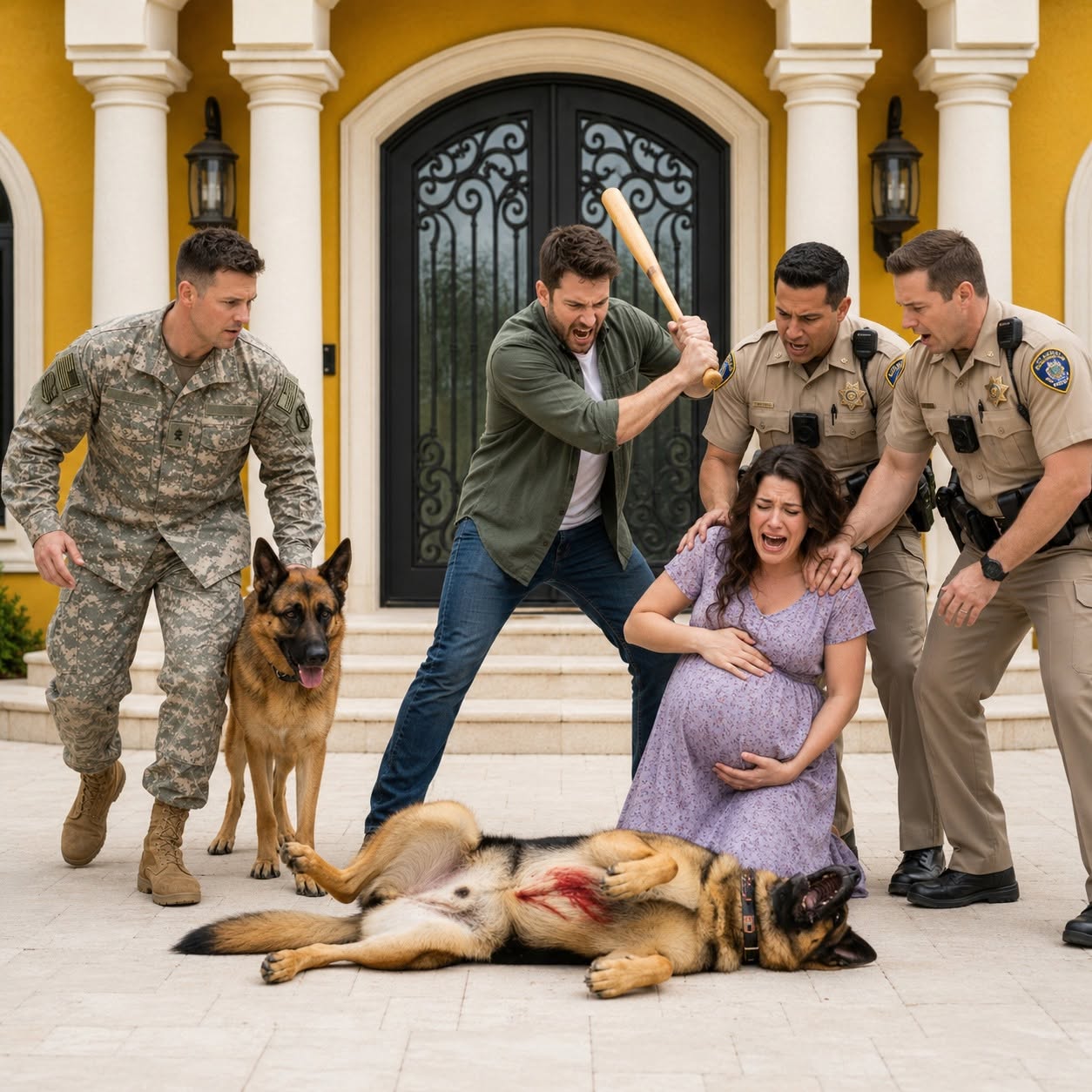
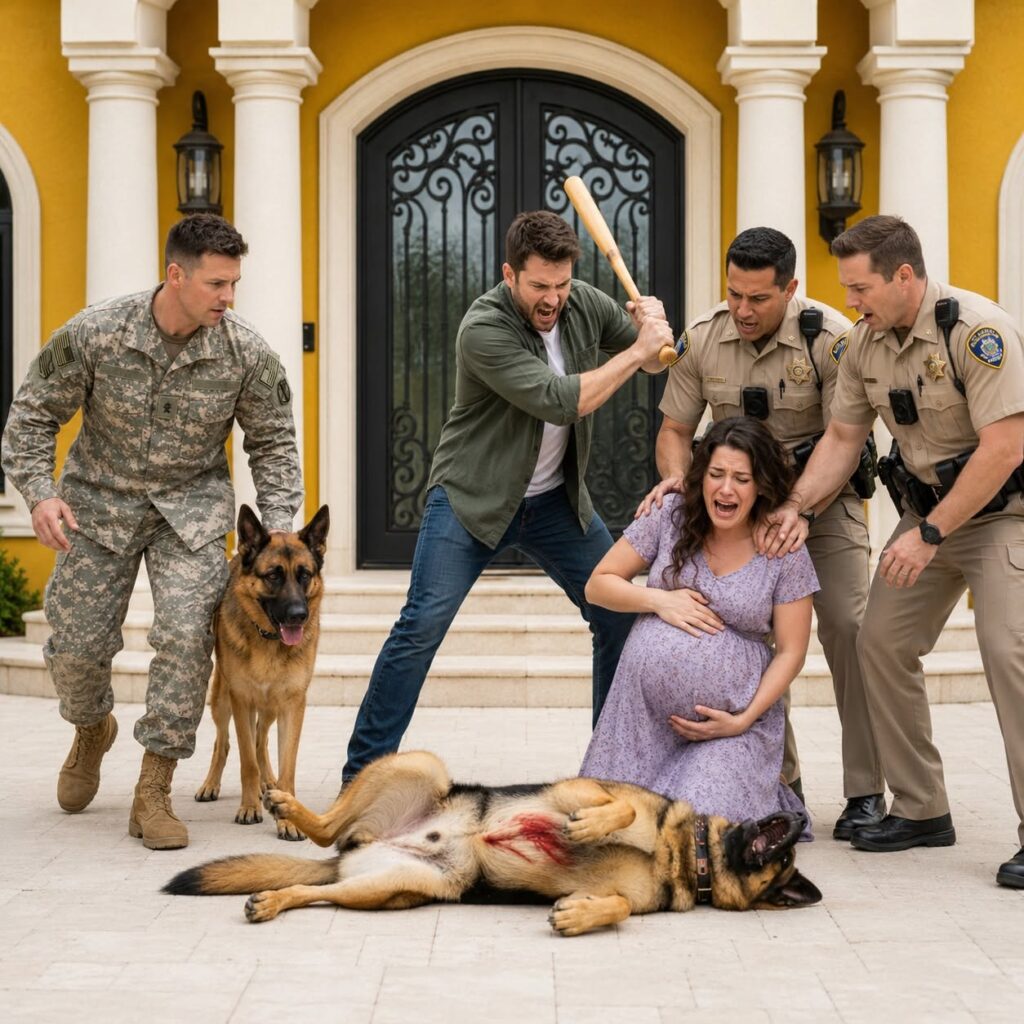
A Rich Man and Corrupt Cops beat a Pregnant Woman and Her Puppy — Unaware, her husband watching
The first thing Hank Mercer saw when he crossed the Grayhaven town line was the cemetery hill.
It rose beyond the old mill road, pale beneath November frost, with rows of weathered stones leaning into the wind like tired soldiers refusing to fall. The maples had lost most of their leaves. Those that remained clung in copper clusters to black branches, and beyond them the church steeple cut into a sky the color of dull pewter.
Hank slowed the truck.
Beside him, Duke lifted his head.
The German Shepherd was old now. Eleven, maybe twelve. Hard years sat in his bones. His muzzle had gone white. A jagged scar split the fur above his left shoulder, and one ear never stood as straight as the other after a blast outside Mosul. But his eyes remained sharp, amber and steady, trained by war to notice what men preferred to miss.
“We’re here,” Hank said.
Duke looked out the windshield.
He did not wag.
Hank had not expected him to.
Dogs understood home differently from people. People made home from deeds, furniture, photographs, and the foolish belief that returning to a place meant returning to who they had been. Dogs understood home by scent, by grief, by the people who were missing from the doorway.
Hank had been gone from Grayhaven for twenty-eight years.
His wife, Elise, had been buried there for three.
He had missed the spring thaw after her funeral because he was still recovering from surgery. He had missed the first anniversary because the Navy hospital in San Diego had been running scans that turned optimism into softer words. He had missed the second because he was in a room with a young oncologist who could not meet his eyes while explaining that the cancer had crossed borders medicine could no longer patrol.
Stage four.
Pancreatic.
Liver involvement.
Palliative care.
Time measured in months if he was lucky, weeks if he was not.
Hank had listened, nodded, and asked whether he could travel.
The oncologist had blinked. “Travel?”
“To Vermont.”
“To family?”
“To be buried beside my wife.”
The doctor had said nothing for several seconds.
Then he had said, “You should go soon.”
So Hank had packed two duffel bags, a box of Elise’s letters, one folded dress uniform, three bottles of pills, and Duke.
The truck rolled down Main Street.
Grayhaven looked smaller than Hank remembered, but more wounded than small. The hardware store was boarded up. The diner had new owners and a new name painted badly over the old one. The mill where his father had worked before the fire was now a skeleton behind chain-link fence. A banner across the town square advertised the Winter Heritage Festival, though half the bulbs in the streetlamps were out and the word heritage seemed to be doing more work than any committee had a right to ask of it.
A boy in a red hoodie stopped kicking slush from the curb to stare at the truck. An old woman came out of the pharmacy and watched as Hank passed. People in small towns did not need to know who you were to know you were from somewhere else now.