 111
111 2
2 3
3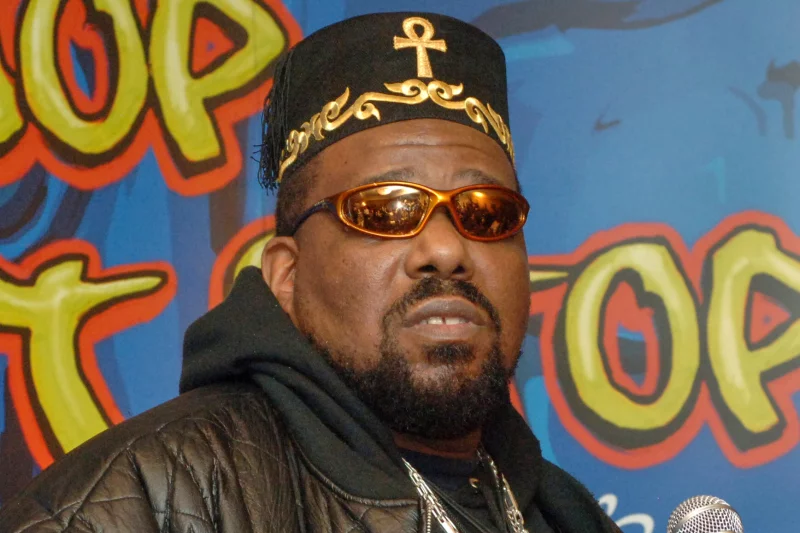
The global music community is reflecting on the end of an era following the passing of Afrika Bambaataa (born Lance Taylor), the visionary DJ and founder of the Universal Zulu Nation. Bambaataa passed away on Thursday, April 9, 2026, at the age of 68. Known as the “Amen Ra of Hip-Hop Culture,” he was a central figure in the trinity of the genre’s founding fathers, alongside DJ Kool Herc and Grandmaster Flash.
For the readers of localpaperdaily.com, Bambaataa’s legacy is not just one of music, but of social engineering. He famously transformed the gang culture of the South Bronx into a global movement defined by “Peace, Love, Unity, and Having Fun.” Here is a data-driven look at his career, his technical innovations, and his lasting impact on global sound.
In the early 1980s, while the burgeoning hip-hop scene was largely focused on funk breaks and disco loops, Afrika Bambaataa looked toward the future—specifically toward Europe. His 1982 masterpiece, “Planet Rock,” changed the technical trajectory of music forever.
The Innovation Figures:
The Roland TR-808: Bambaataa and producer Arthur Baker were among the first to utilize the Roland TR-808 drum machine in a hip-hop context. This created the “boom” and “snap” that became the blueprint for everything from 90s G-Funk to 2020s Trap.
The Kraftwerk Influence: By sampling the German electronic group Kraftwerk (specifically “Trans-Europe Express” and “Numbers”), Bambaataa bridged the gap between European synth-pop and Bronx street culture.
The BPM Shift: “Planet Rock” operated at a faster, more mechanical tempo than standard funk breaks, birthing the “Electro” subgenre and influencing the development of Techno and House music in Detroit and Chicago.
Beyond the turntables, Bambaataa’s most significant contribution was the formation of the Universal Zulu Nation (UZN). Following a trip to Africa, where he was inspired by the communal spirit of the Zulu people, he returned to the Bronx to provide an alternative to the violence of the “Black Spades” gang.
The Four Pillars Framework:
Bambaataa is widely credited with formalizing the “Four Pillars of Hip-Hop,” a technical framework used by educators and historians today to define the culture:
MCing (Oral): The art of the rhyme and storytelling.
DJing (Aural): The technical manipulation of vinyl and sound systems.
Breaking (Physical): The athletic and acrobatic dance form.
Graffiti (Visual): The aesthetic and public expression of the movement.
By organizing these elements under a single cultural banner, Bambaataa ensured that Hip-Hop was recognized as a legitimate art form rather than a passing urban fad.
At localpaperdaily.com, we provide a complete journalistic record. In his later years, Bambaataa’s legacy was complicated by serious civil allegations. In 2021, several individuals came forward with claims of historical abuse dating back to the 1970s and 80s. While Bambaataa denied these allegations and was never criminally charged, the controversy led to a technical fracture within the Zulu Nation leadership.
When evaluating his “Figures” and “Facts,” historians now balance his immense cultural contributions against these serious personal allegations, reflecting a shift in how we document the lives of public figures in the 2020s.
The “Fact” is that without Bambaataa’s intervention, the South Bronx might have remained a cycle of gang warfare. The “Figure” is the $100 billion+ global industry that Hip-Hop has become in 2026.
From the streets of the Bronx to the Olympic stages (where Breaking made its debut), the culture Bambaataa helped codify is now the dominant force in global youth identity. His ability to fuse disparate sounds—rock, funk, electronic, and soul—demonstrated that music is the ultimate “Universal Language.”
Afrika Bambaataa’s life ended at age 68, but his “Sonic Fingerprint” is embedded in every drum machine, every synth loop, and every community center that uses hip-hop to bridge social divides. He was a man who saw the future in a drum machine and a global community in a park jam.
As the beat of “Planet Rock” continues to echo through clubs and headphones worldwide, the architecture he built remains as the foundation of modern music history.