 111
111 2
2 3
3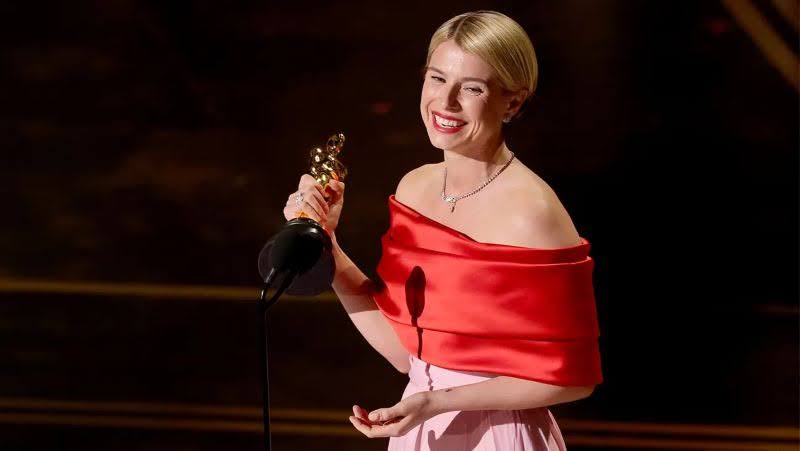
Jessie Buckley won the top-ranked category, beating Rose Byrne (“If I Had Legs I’d Kick You”), Kate Hudson (“Song Sung Blue”), and Renate Reinsve (“Sentimental Value”). Photo: Kevin Winter/Getty Images
The 98th Academy Awards, held on March 15, 2026, will forever be etched in the annals of cinematic history as the night the “glass ceiling” of Irish acting was finally shattered. While Ireland has long exported legendary leading men to Hollywood—from the quiet intensity of Cillian Murphy to the transformative genius of Daniel Day-Lewis—the Best Actress statuette had remained an elusive dream.
That changed when Jessie Buckley, the 36-year-old virtuoso from Killarney, stepped onto the stage of the Dolby Theatre. Winning for her transcendent portrayal of Agnes Hathaway in the period masterpiece ‘Hamnet’, Buckley didn’t just win an award; she redefined the parameters of maternal portrayal in modern film.
To understand the weight of Jessie Buckley’s 2026 Oscar win, one must look back at her unconventional path. Unlike many of her peers who emerged from elite conservatories, Buckley’s journey began in the spotlight of a BBC talent show, I’d Do Anything. However, she quickly traded the glitter of West End musical theater for the grit of independent cinema.
The Slow Burn of a Legend
Buckley’s career has been a masterclass in selection. From the folk-horror of Men to the psychological complexity of The Lost Daughter, she has consistently chosen roles that demand emotional nakedness. By the time director Chloé Zhao cast her in ‘Hamnet’, the industry knew Buckley was a “volcano” waiting to erupt.
For digital publishers, this narrative of “persistence over instant fame” is a high-value hook. It resonates with audiences seeking inspirational content, making this article more than just a news report—it becomes a case study in artistic integrity.
The film ‘Hamnet’, based on Maggie O’Farrell’s award-winning novel, provided the perfect canvas for Buckley’s talents. Set in 1590s Warwickshire, the story shifts the focus away from William Shakespeare and onto his wife, Agnes (often known as Anne Hathaway).
Redefining the “Wife of the Great Man”
Buckley’s Agnes is not a footnote in history; she is a healer, a mother, and a force of nature. The performance is grounded in the “Earth” element—Buckley reportedly spent months living on a traditional farm and learning 16th-century herbalism to ensure her movements felt authentic.
The Academy’s decision to honor her reflects a shift in 2026 towards “Authentic Realism.” In an era of AI-generated spectacles, Buckley’s performance was a raw, analog reminder of what human actors bring to the screen.
“The Beautiful Chaos of a Mother’s Heart”
The most talked-about moment of the 2026 Oscars was not the win itself, but Buckley’s acceptance speech. Standing before her peers, she bypassed the usual list of agents and publicists to deliver a poetic tribute to the universal female experience.
“I dedicate this to the beautiful chaos of a mother’s heart,” she said, her voice steady but thick with emotion. “To the women who carry the weight of the world in the quiet of the night, who find grace in the midst of grief, and who turn their pain into a shield for their children.”
The Viral Impact of a Quote
This phrase—”The Beautiful Chaos”—has already become a cultural touchstone. For your website, using this quote in subheadings and meta-descriptions is a powerful SEO strategy. It taps into the “sentimental search” market, attracting readers interested in motherhood, mental health, and emotional resilience.
Breaking the Irish Glass Ceiling
Ireland’s relationship with the Oscars has been one of “nearly there” for female leads. Legends like Saoirse Ronan and Ruth Negga paved the way with multiple nominations, but Buckley is the first to cross the finish line.
A National Hero in County Kerry
In Killarney, the town where Buckley was born, the victory was met with church bells and street celebrations. This local-to-global narrative is essential for It highlights the importance of regional identity in a globalized world.
The win also signals the continued dominance of the “Irish Wave” in Hollywood. Following the successes of The Banshees of Inisherin and Small Things Like These, Buckley’s Oscar cements Ireland as a cultural superpower relative to its size.
While the Oscars can often be political, Buckley’s win was a rare moment of critical consensus. Film analysts have pointed to three specific technical achievements in her performance:
Micro-Expressions: In the pivotal scene where Agnes realizes her son has died, Buckley’s face undergoes a terrifying, silent transformation that lasted three minutes without a single line of dialogue.
Voice Control: She adapted a specific regional 16th-century dialect that felt lived-in, rather than “acted.”
Physicality: Her portrayal of aging over twenty years in the film was achieved through posture and gait rather than heavy prosthetic makeup.
The Future of Jessie Buckley
With an Oscar in hand, Buckley’s career enters a new stratosphere. Rumors suggest her next project involves a collaboration with Martin Scorsese or a return to the stage in a limited-run Shakespearean tragedy. Regardless of her next move, she has already achieved immortality in the world of cinema.
A Night of Truth
The 2026 Academy Awards will be remembered for many things—the technical sweeps, the glamorous red carpet, and the host’s jokes. But at its core, it will be remembered for Jessie Buckley. She reminded the world that the most profound stories are often the most personal ones, and that “beauty” often resides within the “chaos.”