 111
111 2
2 3
3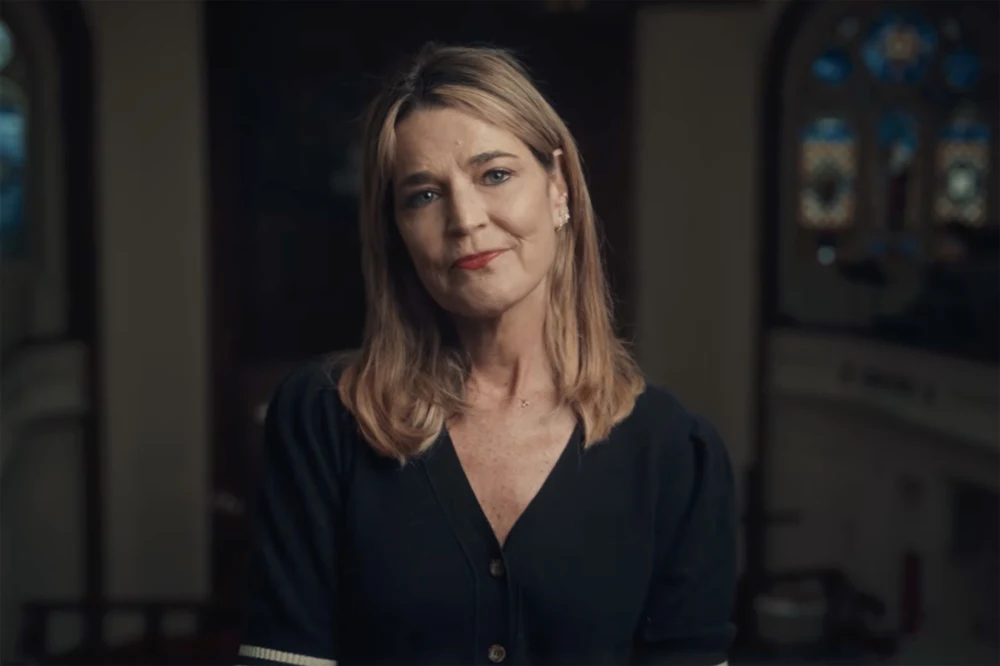
The disappearance of a loved one is a trauma that leaves a permanent shadow on the soul, “I Still Believe”: Savannah Guthrie’s Defiant Easter Message Amidst the Search for Her a reality that Today show co-anchor Savannah Guthrie has been living for over two months. On Easter Sunday 2026, Guthrie broke her silence with a message that was as “dark” as it was defiant, offering a raw look at faith under fire. For the readers of localpaperdaily.com, this isn’t just a celebrity news story; it is a profound exploration of human resilience. Guthrie’s mother, Nancy Guthrie, vanished from her Arizona home in early February, leaving a family in agony and a nation watching in sympathy. In her Easter reflection for the Good Shepherd New York church, Guthrie didn’t offer platitudes. Instead, she offered the truth about what it feels like to believe when the heavens seem silent.
Standing before her congregation and a digital audience, Savannah Guthrie didn’t lead with a celebration. She led with a confession. “There are moments in which the promise [of Easter] seems irretrievably far away,” she admitted. “When life itself seems far harder than death.”
Savannah Guthrie shared a video message of hope at Good Shepherd New York’s Easter service.Good Shepherd New York
For Guthrie, the primary source of this “harder than death” feeling is the technical and emotional weight of uncertainty. Her 84-year-old mother, Nancy, was last seen on January 30. Despite a $1 million reward and an exhaustive search by authorities, there have been no traces. Guthrie described this as a “grievous and uniquely cruel injury”—the injury of not knowing.
In her most vulnerable moment, Guthrie admitted to feelings of “deep disappointment with God” and “utter abandonment.” This level of honesty is rare for a public figure of her stature, but it served a vital purpose: it validated the feelings of anyone who has ever felt that their prayers were hitting a ceiling of lead. She challenged the traditional narrative of “Easter joy” by suggesting that the light is only magnificent because we have known the blinding darkness of the grave.
Most Easter messages jump straight from the tragedy of Good Friday to the triumph of Sunday morning. Guthrie, however, chose to linger on Saturday—the “Third Day” of the tomb. She noted that we often “cut to the happy ending,” but she found herself identifying with the silence of the grave.
“What did Jesus actually know after he breathed his last?” she asked. In a moment she described as “perhaps irreverent,” she confessed to thinking that she had stumbled upon a feeling that even Jesus might not have known: the excruciating confusion of the “not knowing.” By highlighting the cry of “My God, my God, why have you forsaken me?”, she reclaimed the right of the believer to ask hard questions.
This is a technical shift in how we view faith. Guthrie’s message suggests that faith isn’t the absence of doubt or the presence of answers; it is the act of holding onto the “conviction of the unseen” while standing in the middle of a storm. Her willingness to share this “dark” message was a protest against the superficiality of modern holiday celebrations.
Just one day after this emotional message, on Monday, April 6, 2026, Savannah Guthrie returned to the Today show for the first time in over two months. The transition from a somber church message to the bright lights of Rockefeller Plaza was a technical masterclass in professional resilience.
“It is good to be home,” she told her co-host Hoda Kotb and the millions watching at home. Guthrie had previously stated that she wouldn’t “fake” her way through her return. “I want to smile, and when I do, it will be real,” she had promised. Her return was not a signal that the crisis was over—Nancy Guthrie remains missing—but rather a declaration that life must continue even in the presence of grief.
She described her return to the desk as an act of “joy as protest.” By choosing to do her job, to smile, and to engage with the world, she is protesting the darkness that tried to swallow her family. It is a powerful reminder that we can be “changed persons” and still find our way back to our purpose.
She described her return to the desk as an act of “joy as protest.” By choosing to do her job, to smile, and to engage with the world, she is protesting the darkness that tried to swallow her family. It is a powerful reminder that we can be “changed persons” and still find our way back to our purpose.
While Savannah Guthrie is back at work, the mission to find Nancy Guthrie is far from over. The authorities in Tucson, Arizona, along with private investigators, continue to follow leads. The family has emphasized that they cannot “move forward with healing” without knowing the truth.
The Guthrie family’s appeal is a call to the public’s collective memory. “Someone knows something,” Savannah has pleaded. “Even if that something is just that someone’s been acting strange for the last seven or eight weeks.”
The case of Nancy Guthrie highlights a broader issue: the thousands of missing persons cases that remain unresolved every year. In her absence, Savannah has already begun using her platform to support organizations like the Center for Missing and Exploited Children, turning her personal pain into a technical resource for other families in similar agony.
Savannah Guthrie’s Easter message concluded with three words that have since resonated across social media: “I still believe.”
This wasn’t a blind statement of optimism. It was a battle-weary affirmation. It was the “conviction” of a woman who has looked into the abyss and decided that the light is still there, even if she can’t feel its warmth right now.
For those of us navigating our own seasons of uncertainty—whether financial, physical, or emotional—Guthrie’s message serves as a technical blueprint for survival. Acknowledge the pain, ask the irreverent questions, and then, when the sun comes up, choose to believe anyway. Her return to the screen is a testament to the fact that we don’t have to have the answers to have the hope.